“Translating means understanding, above all, how words slip and slide into each other, how they overlap, how they end up producing a fertile lexical promiscuity.”
from Jhumpa Lahiri’s “Lingua / Language,” Translating Myself and Others
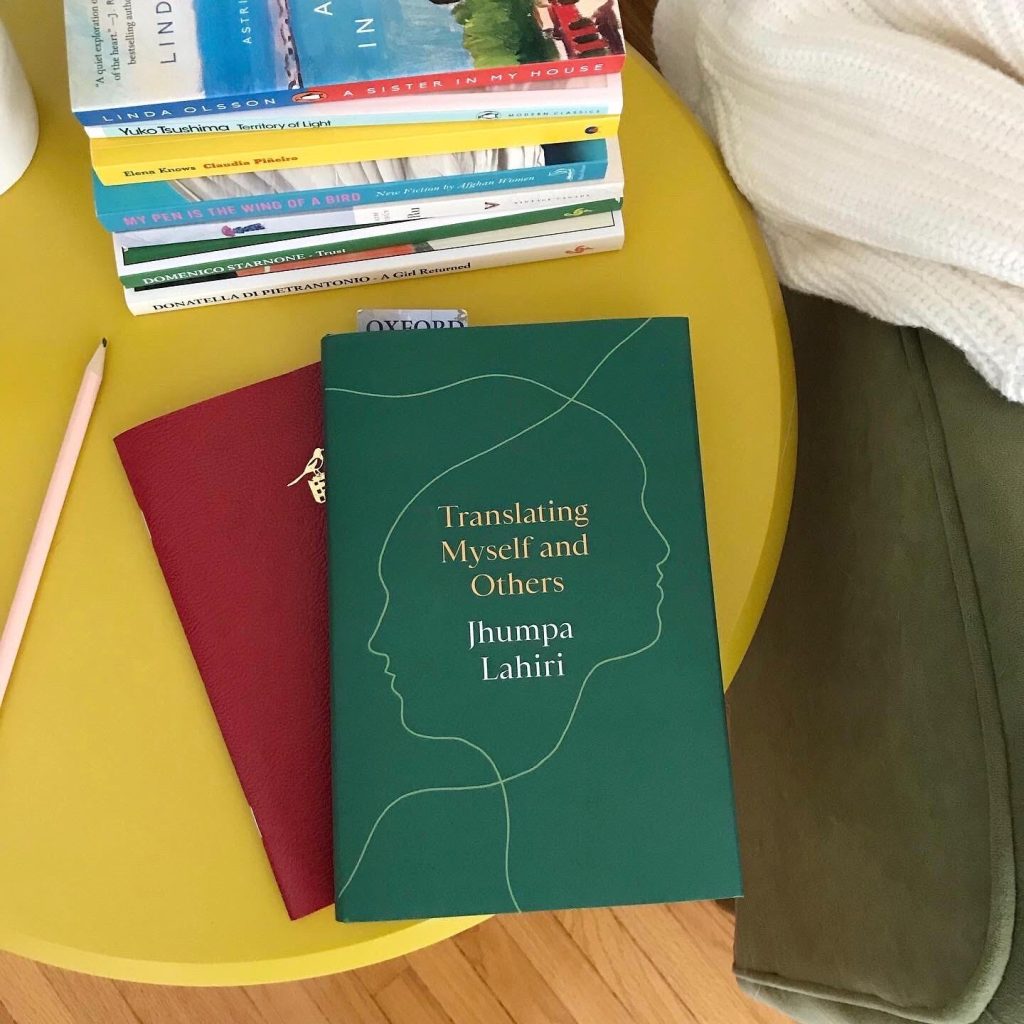
Reading the ten essays compiled in Translating Myself and Others is like diving into a body of water, one that has a subtle current that draws you into its depths. Jhumpa Lahiri’s essays submerge you in the world of translation and translated literature as they flow between close readings of Latin, Italian, and English texts; personal recollections of learning Italian and of becoming a translator; and illuminating meditations on translation and the role of the translator.
Lahiri wades into Ovid’s Metamorphoses and the myth of Echo and Narcissus to untangle definitions of writing and translating. She dives into the process of translating three of Domenico Starnone’s novels from Italian into English, unpacking the unique challenges that prose and authorial voice pose on translators. And she surfaces with deeply personal discussions of self-translation and the experience of writing in a language learned later in life—addressing issues of identity, belonging, and the immigrant experience in the context of translation.
While certain essays stood out more than others, I would put this down to the fact that a handful were written to accompany texts I haven’t yet read, putting me at a disadvantage to fully appreciate their discussions as standalone essays. That being said, the Introduction and Afterword bookend the collection beautifully with intimate and poignant glimpses into Lahiri’s relationship with her mother, which tie in so brilliantly to her own reflections on language and translation. Discussions of living, reading, writing, and translating in isolation over the last couple of years capture the comfort that many of us have found in literature during the pandemic, and Lahiri’s insight into translation as a political act is particularly fascinating.
With the focus of a swimmer moving across a body of water to reach the opposite shore, Lahiri has crafted a deeply personal collection of essays that provide varied and multifaceted readings of translated literature and definitions of translation. Translating Myself and Others bursts our understanding of translation open and is a true celebration of the translators who bring new voices and ideas into our lives!
 Sydney K Erickson
Leave a comment