“Every day she felt unnerved by how unreasonable her love and her fury, which had become one, seemed. She spent most days feeling stunned, aware only of a sort of rage swirling loose inside her like a rainstorm gathering speed, and it frightened her to think of what might happen if she were to let it implode. She was so angry with people, men like Gregory, assuming all she had was her hands full and that there was nothing more for her to show than the baby she adored, and she was angry with women like Lydia who made her feel like there must be something wrong with her for still wanting more.”
from Huma Qureshi’s “Waterlogged”, Things We Do Not Tell The People We Love
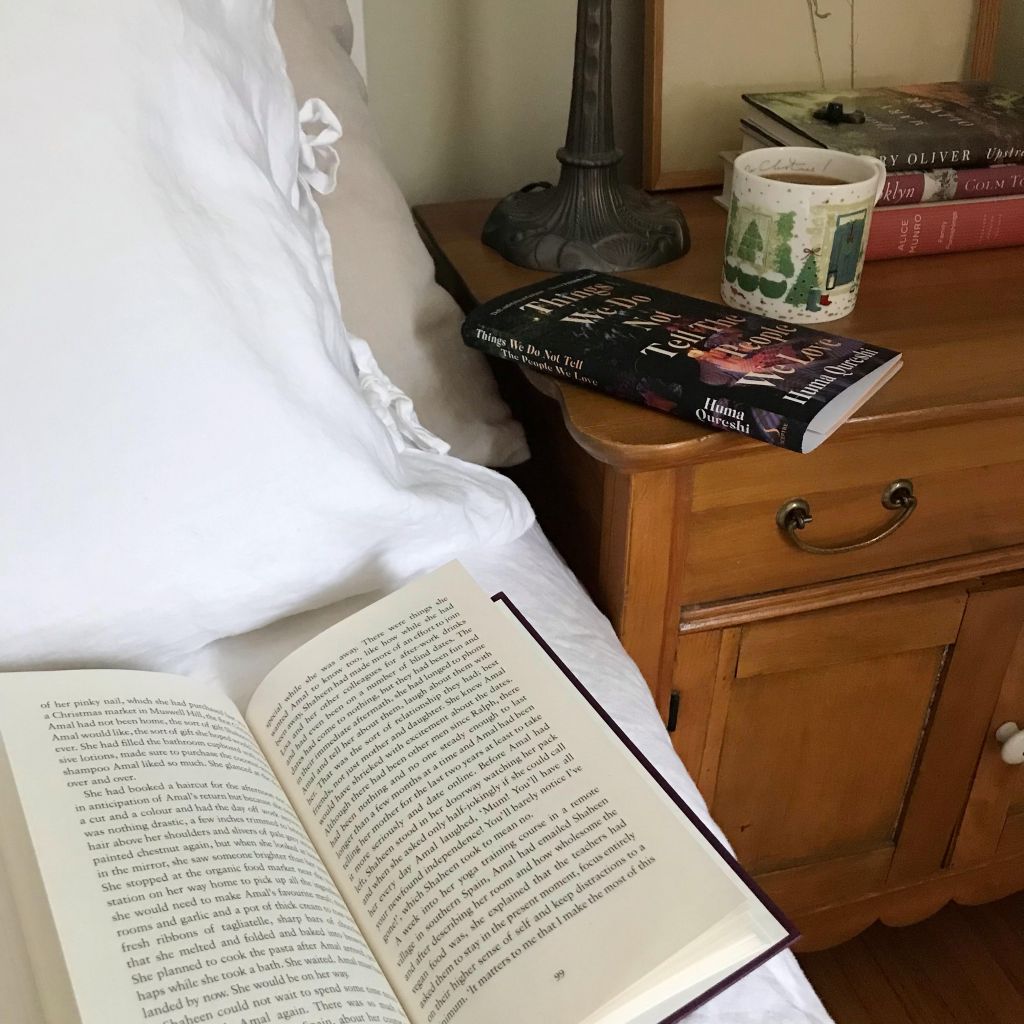
I have always loved short stories and I have my entire collection of short fiction in the bookcase next to my writing desk. The shelves are filled with old favourites and some that have yet to be discovered, but the very best collections are the ones that have surprised me and have reminded me of just how brilliant this form can be. Huma Qureshi’s Things We Do Not Tell The People We Love is that kind of collection. The pages are inked with some of the most acute observations and the most scrumptious writing—it will leave you wondering if you’ve ever read about love and emotion quite like this before.
From the English countryside to Tuscany and the South of France, and from Lahore to London, we witness the complicated, messy, and enduring forms of love between mothers and daughters, friends, families, and lovers. As the title suggests, the stories often address the things that are left unsaid and undone in moments of misunderstanding, frustration, and silence. While the narratives investigate feelings of loneliness, boiling rage, and incomprehensible sadness, thanks to the descriptive and unhurried nature of Qureshi’s writing, these moments are beautifully distilled and are presented with such honesty and empathy.
In “Firecracker,” a woman begins to unravel and reexamine her relationship with her best friend after she is late to her wedding. In “Superstitious,” following the death of her husband, a widow is haunted by a story she heard as a young girl during her summers in Lahore. In “Too Much,” Shaheen must reevaluate her relationship with her daughter Amal after a forced distance and silence is wedged between them. While the collection is filled with imagery and metaphors that feel so unique to Qureshi’s writing, the stories are also impeccably laced with subtle twists and unexpected turns that beg you to read on.
If I were to choose one word to describe Things We Do Not Tell The People We Love, it would be ’emotional’. I felt that at the very core of this collection we could see an immensely talented writer carefully and thoughtfully mining the feelings and the experiences of their characters, delving into their emotions and emotional responses. As I alluded to earlier, in many ways I felt as though I was reading about love and emotion for the very first time—it was touching and it was painful, but it was honest, always honest.
If you love short stories, or if you’re new to the form, I encourage you to pick up Qureshi’s collection, it was one of my favourite reads of 2021 and one I will continue to recommend!
 Sydney K Erickson
Leave a comment