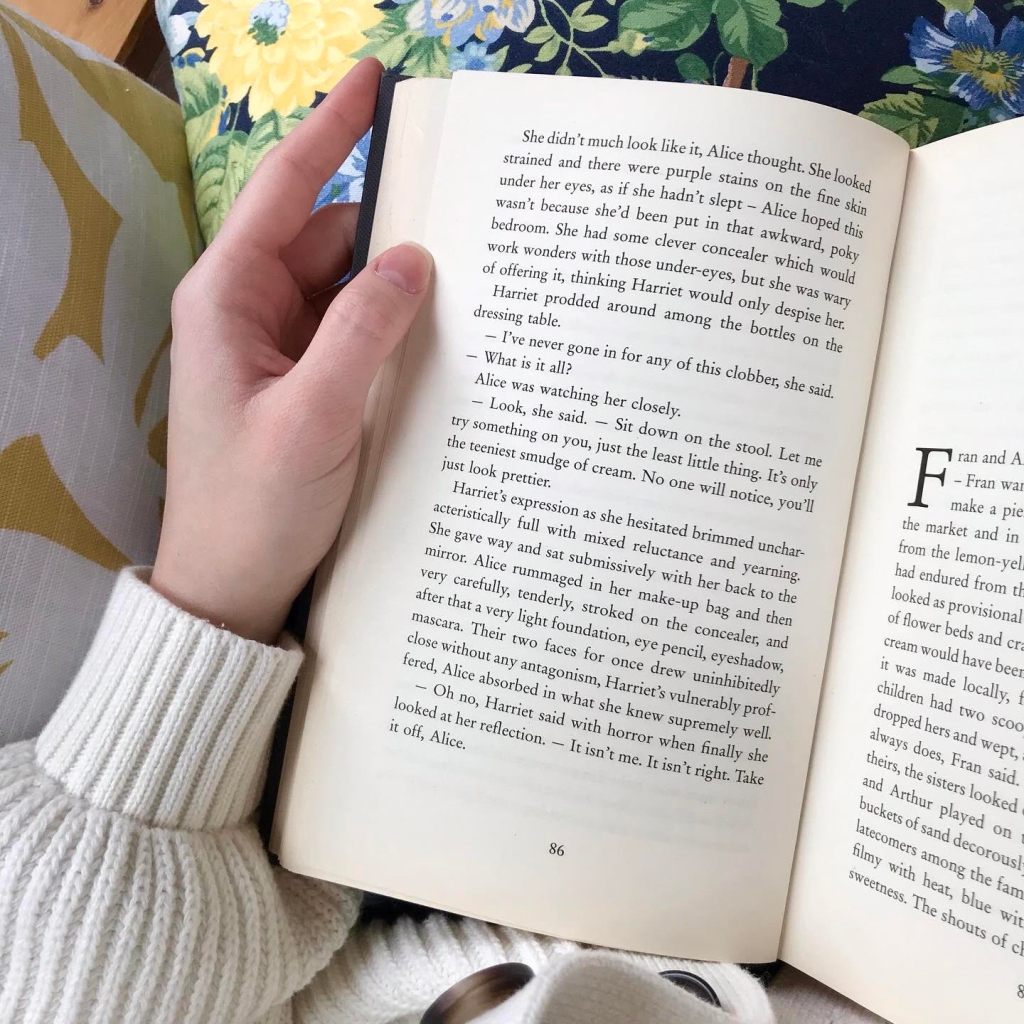
“Alice and Kasim stood peering through the French windows: the interior seemed to be a vision of another world, its stillness pregnant with meaning, like a room seen in a mirror. The rooms were still furnished with her grandparents’ furniture; wallpaper glimmered silvery behind the spindly chairs, upright black-lacquered piano and bureau. Paintings were pits of darkness suspended from the picture rail. Alice had told her therapist that she dreamed about this house all the time. Every other house she’d lived in seemed, beside this one, only a stage for a performance.”
from Tessa Hadley’s The Past
In the spring of 2020, I read Tessa Hadley’s most recent novel, Late in the Day, and quickly ordered a copy of The Past so I could have something else written by Hadley on my bookshelf—I knew I would want to read her writing again and I had to be prepared. In the span of that one novel, Hadley became one of my favourite authors, someone I knew I could read absolutely anything by and probably enjoy—I was right. I’ve since listened to Hadley being interviewed, read some of her stories published in The New Yorker, and paid close attention to her own reviews of books, especially if they glowed with admiration, that was a sure sign that I too would enjoy them! I picked up The Past at the beginning of August when I scoured my shelves for a longer novel about a family, it was exactly what I was looking for and much more than what I’d expected.
The novel is largely set during a three-week holiday that draws four siblings back to their grandparents’ home, bringing them all under the same roof for the first time in years and under this specific roof for the first time in what seems like a lifetime. Fran brings her two young children, while Roland’s third wife and teenage daughter accompany him on this family vacation, and Alice chooses to invite her ex-boyfriend’s son. These additional characters mark the inevitable passage of time as the siblings branch out into families of their own and as a new generation is introduced to this summer abode. What follows is a three-part novel that opens and closes on the holiday as longstanding tensions, unwelcome memories, and unwanted discoveries rattle and disturb this fragile family gathering. The narrative shifts momentarily in the middle of the novel as we venture into the past and to a time when three of the siblings accompanied their mother to this house after she decided to leave their father. Spanning decades and generations, The Past moves within this ambitious cast of characters to vividly capture each individual voice, to delve into their relationships with one another, and their memories of and connections to the house they are unable to care for and are struggling to part from.
In this sprawling story, Hadley has drawn fully formed characters and has captured every action and every line of dialogue with such precision and care so as to create a cast that is not only unique and memorable but that seems to exist beyond the confines of this novel. From the young imaginative Lucy, to the quiet and introspective Harriet, and to Alice, both impulsive and somehow lovable, The Past is truly a masterclass in characterization. If you’re like me and enjoy stories that pull families together to explore their intricate and complex relationships, you will love this book—The Past vividly captures family, time, and place, but weaves discussions of sexuality, both budding and unexplored, of social class, and of privilege into the novel. While just under four-hundred pages, this novel recalls the relationship dynamics in Alice Munro’s short fiction, and the attentive and unhurried descriptions of setting in Henry James’ writing, but The Past is truly a saga of its own that stages Hadley’s brilliance as both a creator and a writer.
 Sydney K Erickson
Leave a comment