“There was not only nothing nice, there was nothing definite at all to remember, only a great many years that had passed along and were now finished, leaving only the remnants of themselves—herself, Hubert, the furniture; even the plants in the garden only seemed to hold their position in order to mark the shabbiness of time. All the things that she had collected together and arranged about the house could blow away, or fall into a pitiful heap, if it were not that the walls of the house were attached on both sides to the walls of the neighboring houses.”
from Maeve Brennan’s “An Attack of Hunger”, The Springs of Affection: Stories of Dublin
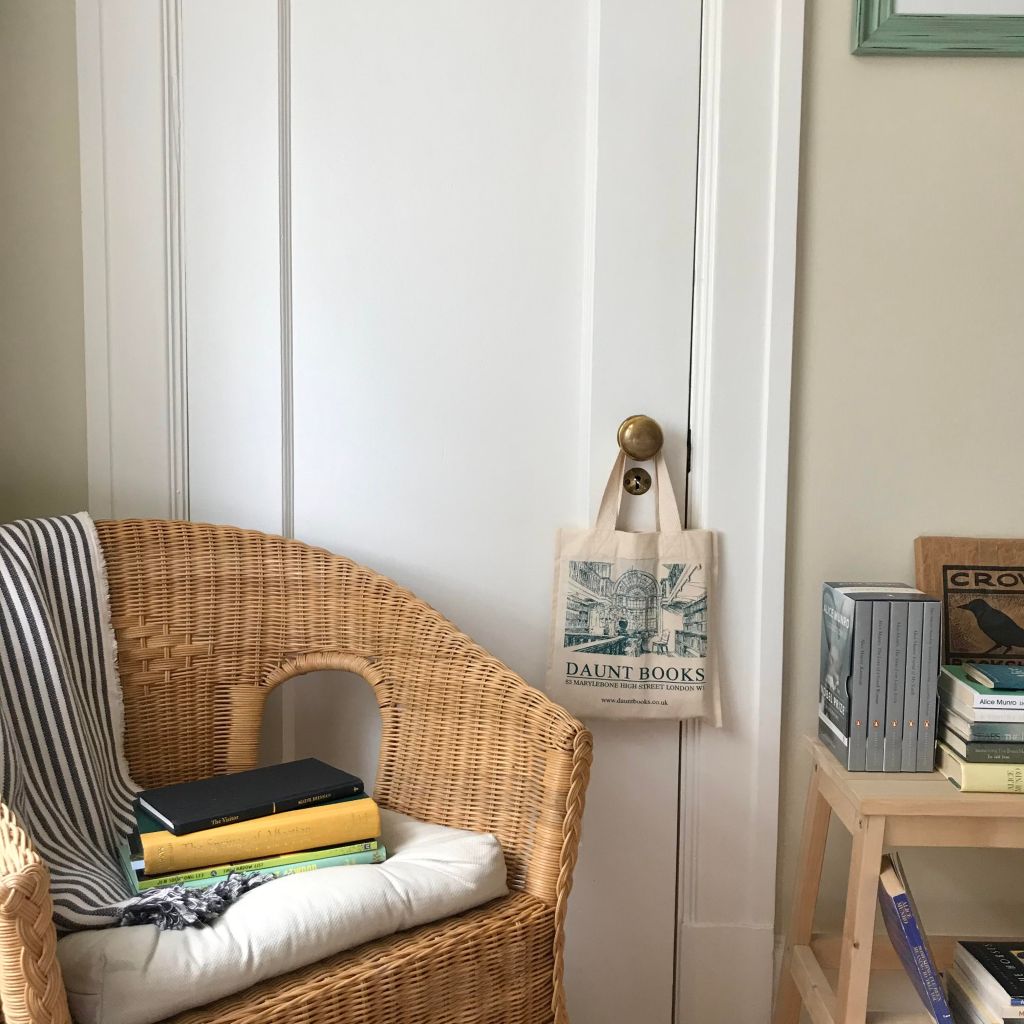
I was introduced to Maeve Brennan in an article published by the CBC in which the author, Jennifer Warren, compiled a list of writers that Alice Munro had mentioned over the years. Among a few specific titles and childhood favourites was “a triad of great Irish women writers” including Brennan, Edna O’Brien, and Mary Lavin. I managed to find an edition of The Springs of Affection: Stories of Dublin and quickly ordered it, knowing very well that I would enjoy anything Munro loves and recommends! It took me just over a month to read Brennan’s The Springs of Affection and as I read through the final stories of this collection, I still felt as though I did not want it to end. Despite reading the narratives of families in Dublin for weeks, not one part of me felt bored with the writing and not one inch of me wished I had read it more quickly—I only wish I had discovered her work sooner.
Much like Munro, Brennan writes about ordinary people and families, and the complexity of family ties that are often taut and rough around the edges. In The Springs of Affection, we are introduced to three families, we witness the initial excitement of courtship at a party, the deterioration of a marriage resulting in a couple’s estrangement in their own home, and a husband’s walk by his first house as a married man in Dublin. These stories deal with marriage and family relations, with connections to the home and to the city, and with the love both given and received at varying stages of life.
Brennan crafts a myriad of scenes that walk the fine line between this love and the more sinister side of obsession cleverly veiled as affection—in one story, a mother’s care for her son quickly reveals itself as careful manipulation and control. This emotional complexity and the evolution of these stories is presented through varying perspectives as each character is given their own time on the page. Brennan does not simply tell us who to trust, but instead challenges us to piece things together as we move through the layered narratives of this collection. I think this is the power of Brennan’s stories, she seems to be acutely aware of writing’s persuasive effects and instead of using this to draw our sympathy and our loyalty in one direction, she slices it with shifts in perspective that are often revelatory and contradictory. From one page and story to the next, we ask ourselves who is reliable and ultimately ask, Well, whose side am I on now?
To put it quite simply, at the centre of Brennan’s stories is family and the convoluted ties that bind them together—which the author investigates with empathy, unflinching honesty, and detailed prose. After reading The Springs of Affection, I can say that Brennan is one of my very favourite authors, a spot I once thought could only be occupied by Munro. While Brennan’s work is still difficult to find, some used bookstores have older editions of her writing and publishers such as The Stinging Fly (The Long-Winded Lady and The Springs of Affection) and New Island Books (The Visitor) are bringing both her fiction and nonfiction writing back into print. It is thanks to these bookshops and publishers that I have found a new favourite in Brennan and that her work can be read and celebrated today—a celebration that is long overdue!
______________________________________
While you wait for your copy of Brennan’s book to arrive in the mail, here is a podcast with her biographer Angela Bourke, and here is the CBC article that includes a list of authors Alice Munro admires and recommends.
 Sydney K Erickson
Leave a comment